How to Choose an Apparel Manufacturer in China: A Buyer's Checklist
A practical, specification-led checklist for brands, wholesalers, distributors and sourcing teams evaluating apparel suppliers for bulk and repeat orders.
Choosing an apparel manufacturer in China is not simply a matter of finding the lowest quotation or the supplier with the largest product catalogue. The more useful question is whether a supplier can turn your product idea into a clear, repeatable production specification—and keep the approved details consistent from sampling through packing.
This guide covers the questions buyers should ask when sourcing knitwear, wovens, denim, outerwear, activewear, uniforms, childrenswear, sleepwear or a multi-category collection. It is designed for bulk manufacturing and private-label programs rather than one-piece customization.
The short version: what should you verify?
- The supplier understands your product category and intended market.
- Your quotation is based on a sufficiently detailed product brief.
- Open specifications are identified instead of silently assumed.
- The sample has a defined approval purpose and revision record.
- Fabric, fit, construction, decoration and packaging are reviewed together.
- Quality checks are tied to approved requirements.
- Pricing, trade terms, exclusions and possible changes are stated clearly.
- Labels and destination-market requirements are confirmed before bulk production.
- Production changes are documented and their effects are explained.
- The supplier can provide relevant, non-confidential evidence of its working process.
1. Start with the business purpose of the order
Two garments that look similar can require very different production controls. A fashion launch, wholesale core item, company-uniform program and promotional order may use the same basic silhouette, but their expectations for fit, fabric, color consistency, branding, size ratios and packaging can be completely different.
Before comparing suppliers, prepare one brief and send the same version to each candidate. Include:
- Product category and intended customer or use
- Estimated quantity by style, color and size
- Target fabric composition, structure, weight or reference hand feel
- Fit direction, measurement chart, tech pack or reference sample
- Construction details that are important to the product
- Printing, embroidery, labels, tags and packaging requirements
- Delivery country, target date and preferred trade term
If some details are not ready, mark them as open. A good first inquiry does not need to be perfect, but it should separate known requirements from decisions that still need development.
2. Check category capability—not only catalogue breadth
A broad product list shows what a supplier is willing to discuss; it does not automatically prove technical depth in every category. Ask how the supplier would handle the construction, materials and testing relevant to your specific garment.
For example, a heavyweight hoodie raises questions about fleece, rib recovery, shrinkage, zipper quality and decoration on thick fabric. A woven dress may require attention to drape, lining, seam finishing and grading. Activewear adds stretch, recovery, opacity and performance-fabric considerations. Outerwear may involve insulation, hardware, seam construction and more complex material combinations.
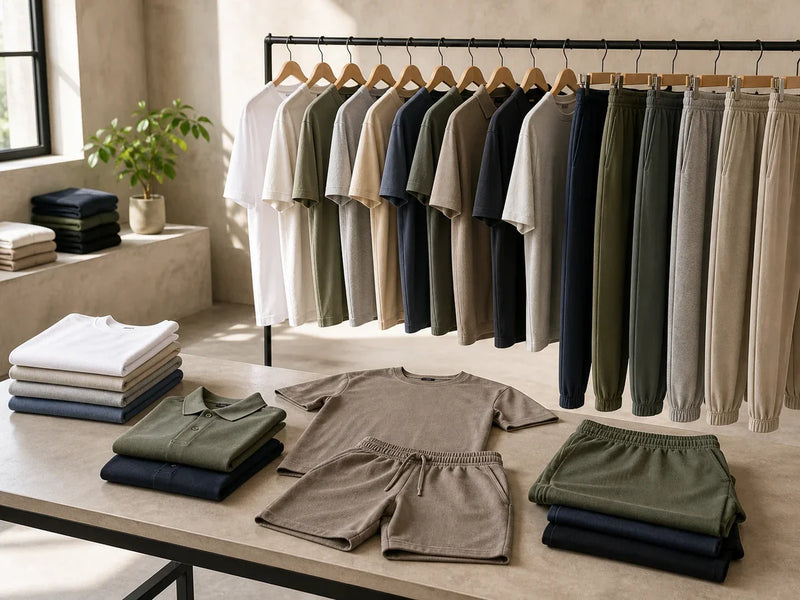
For a collection containing several categories, also evaluate coordination. Shared colors, labels, hang tags and packaging can create consistency, but each garment still needs its own product-specific specification. Review EUCSKY's apparel product categories to see how a multi-category program can be organized.
3. Evaluate how the supplier reads specifications
A tech pack is helpful, but it is not the only possible starting point. A supplier may also review a measurement chart, clear reference images or a physical sample together with written changes. What matters is how the supplier identifies missing, conflicting or commercially important information before sampling and quotation.
Ask the supplier to return a clarification list. It should distinguish confirmed details from open decisions such as:
- Finished garment measurements and tolerance
- Fabric composition, construction, weight and finish
- Stitching, seam type, lining, rib, elastic or other construction details
- Color standard and approval method
- Print or embroidery method, size and placement
- Label content and placement
- Folding, individual packing and carton assortment
A supplier that silently fills gaps may provide a fast price, but the quotation can change once the real requirements are understood.
4. Verify the business identity and working model
Before sending deposits or confidential product files, confirm who will appear on quotations, contracts, invoices and payment instructions. The legal business identity, operational contact and payment beneficiary should form a traceable commercial relationship.
Also ask who will coordinate development, production, quality and shipment. Some suppliers operate one facility; others coordinate a broader production network. For the buyer, the practical issue is not the label attached to the business model—it is whether responsibility is clear, decisions are documented and one team remains accountable for the approved order.
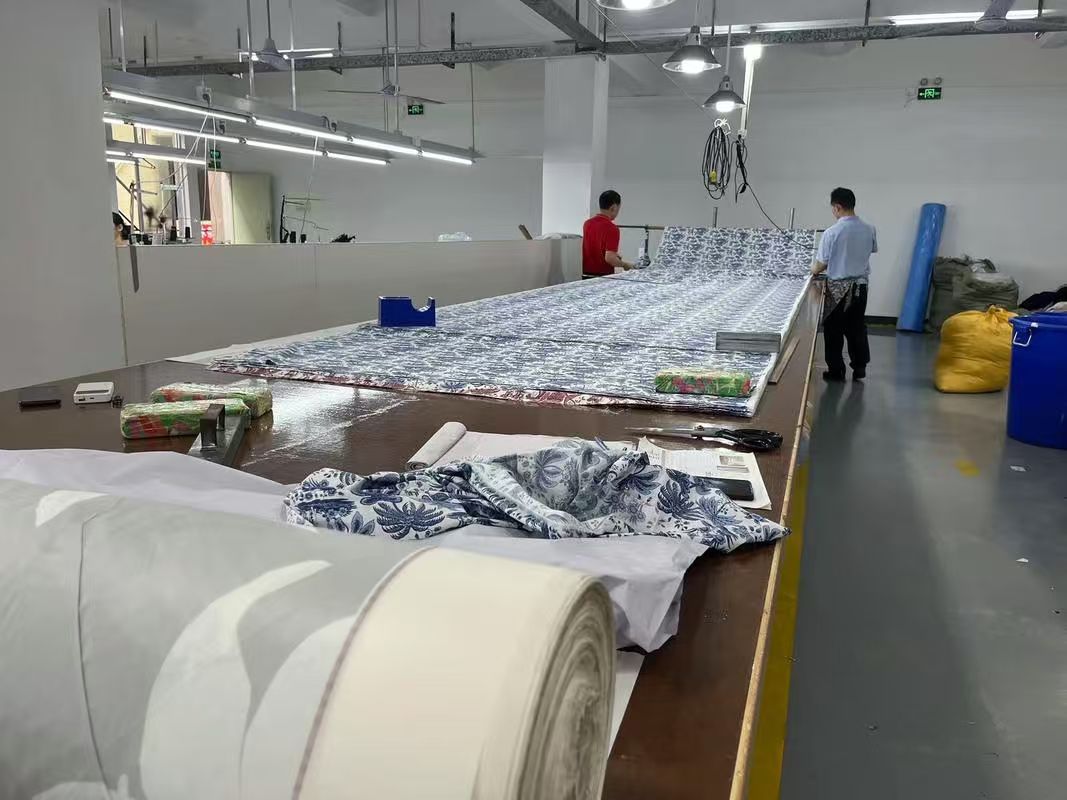
Useful evidence can include workshop and process photographs, blank product details, material swatches, measurement records, quality checkpoints and packing examples. Famous-brand logos or unverifiable customer claims are not substitutes for evidence that relates to your order.
5. Define the sampling and approval path
Sampling is not only a visual preview. It is a controlled step for confirming specific parts of the production specification. Before paying for a sample, agree on what the sample is expected to approve: fit, material, construction, color, decoration, labels, packaging—or a defined combination of these.
- Record the sample version and any substituted material or trim.
- Measure the sample against the agreed chart.
- Consolidate comments into one revision record.
- State which points are approved and which remain open.
- Do not treat an unapproved reference sample as the bulk-production standard.
If the product changes after approval, ask whether a revised sample, strike-off, label proof or packing reference is required. EUCSKY's manufacturing process explains how requirement review, sampling and production approval can be connected.
6. Review fabric as a complete specification
Fabric weight matters, but GSM alone does not define quality, opacity, stretch, recovery, shrinkage, pilling behavior or hand feel. Review composition, yarn and fabric structure, finishing, color requirements and relevant performance expectations together.
A fabric swatch can help with development, but a small cutting does not represent every variation across a production lot. Confirm how bulk material will be compared with the approved reference and whether color, width, weight, shrinkage or other checks are needed for your program.
When comparing quotations, make sure each supplier is quoting the same material direction. A low price based on a different fabric is not a like-for-like comparison.
7. Connect customization to the garment
Printing, embroidery and private-label components should not be treated as separate afterthoughts. Decoration method depends on fabric, construction, artwork, placement and expected appearance. Labels and packaging also affect development timing and the buyer's final brand presentation.
For artwork approval, document:
- Decoration method
- Finished size and placement
- Colors or thread references
- Artwork file version
- The garment, panel or material receiving the decoration
- The approved strike-off, embroidery sample or placement reference
For private label, confirm neck labels, size labels, care and content labels, hang tags, stickers, folding, individual bags and carton marks early. See EUCSKY's private-label production guide for a complete brand-finishing checklist.
8. Ask what quality control is measured against
"We have strict quality control" is too general to evaluate. Quality control should mean comparing production against approved requirements. Ask which checkpoints apply to material receipt, cutting, sewing, decoration, finishing and packing.
Depending on the order, the quality plan may cover:
- Fabric and color comparison
- Key finished measurements
- Workmanship and construction
- Print or embroidery appearance and placement
- Label content, position and attachment
- Size and color assortment
- Folding, individual packaging and carton information
If an inspection standard, sampling level or defect classification will be used, agree on it before production. One generic inspection plan is not automatically suitable for every garment or buyer.
9. Confirm destination-market labeling and compliance
Compliance depends on the product and destination market, so the responsible importer, brand or marketer should review the final requirements. Do not assume that one label format is valid worldwide.
For the United States, the Federal Trade Commission states that most textile and wool products require labels identifying fiber content, country of origin and the manufacturer or another responsible business. The FTC's Care Labeling Rule also requires covered manufacturers and importers to provide care instructions supported by a reasonable basis. Buyers should verify the current rules and their application to the specific product before approving labels.
Official references:
This section is general sourcing information, not legal advice.
10. Compare quotations on the same basis
A unit price is meaningful only when the suppliers are quoting the same product, materials, quantity, decoration, labeling, packing, destination and trade basis. Ask each supplier to show what is included, what remains provisional and what could change after confirmation.
- Unit price and currency
- Quantity and color assumptions
- Sampling, artwork, labels, packaging and testing charges where applicable
- Trade term and shipment basis
- Payment stages and quotation validity
- Items excluded or awaiting confirmation
When one quotation is much lower, identify the specification difference before treating it as a saving.
11. Test communication and change control
Reliable production depends on controlled decisions. During quotation and sampling, observe whether the supplier summarizes open questions, confirms revisions and keeps files organized by version. Fast replies help, but a clear written record is more valuable than speed without traceability.
When a change is requested, ask the supplier to explain its effect on materials, construction, decoration, price and schedule before the change is accepted. This is especially important when design, buying, production and logistics are handled by different people.
12. Confirm packing and shipment preparation
Shipment readiness is part of the product specification. Confirm size and color ratios, individual packing, barcode or sticker information, carton quantities, carton marks, destination and the documents expected for shipment.
The delivery plan should distinguish production completion from final arrival. Transit method, trade term, customs clearance and destination handling can all affect the schedule. Ask which party is responsible for each step and which dates are estimates rather than guaranteed milestones.
Common warning signs
- A final price is offered before the product basis is understood.
- Important questions about fabric, measurements or decoration are ignored.
- Famous customer names are used instead of relevant evidence.
- The sample version and requested corrections are not documented.
- Payment instructions do not match the commercial identity without a clear explanation.
- Quality promises are not connected to measurable requirements.
- Changes are accepted without explaining their price or schedule effect.
- Labels and packing are postponed until production is nearly complete.
A simple supplier scorecard
Score each candidate from 0 to 2 on the following points: 0 means not demonstrated, 1 means partly demonstrated, and 2 means clearly demonstrated with relevant evidence.
- Product-category fit
- Specification discipline
- Relevant process evidence
- Sampling and revision control
- Material confirmation
- Decoration and private-label control
- Quality checkpoints
- Commercial clarity
- Communication and accountability
- Packing and shipment preparation
The score is not a substitute for due diligence, but it makes supplier comparisons more consistent and reduces the influence of one attractive price or sample.
What to send in your first inquiry
You do not need a perfect tech pack to begin. Send the information available now and identify what remains open. At minimum, include:
- Product category and reference images
- Estimated quantity by style or color
- Fabric and fit direction
- Size range
- Artwork, labels and packaging needs
- Delivery country and target date
A useful manufacturer response should turn these inputs into a clear list of confirmed points, questions and next steps.
Prepare your apparel production brief
EUCSKY supports multi-category apparel development, bulk production, private labeling and shipment preparation for brands, wholesalers and distributors. Review our product categories, explore the production workflow, or send a project brief for review.